Every January, the NFL playoffs remind us of one thing: the margin for error disappears. Windows get tighter. Pass rush arrives faster. And one throw that’s a half-beat late can decide a season.
That’s why “arm talent” in the postseason isn’t just about looking the part – it’s about repeatable ball speed when the pressure is highest. And that’s where radar guns have quietly become a game-changing tool for quarterbacks, QB coaches, and training facilities.
Wild Card Weekend Spotlight: Why Velocity Matters Right Now
This year’s NFL playoffs open with Wild Card Weekend January 10–12, 2026, with six games over three days. NFL Football Operations
Here’s the Wild Card slate (Pacific Time):
- Sat, Jan 10: Rams @ Panthers (1:30 PM) • Packers @ Bears (5:00 PM)
- Sun, Jan 11: Bills @ Jaguars (10:00 AM)
49ers @ Eagles (1:30 PM)
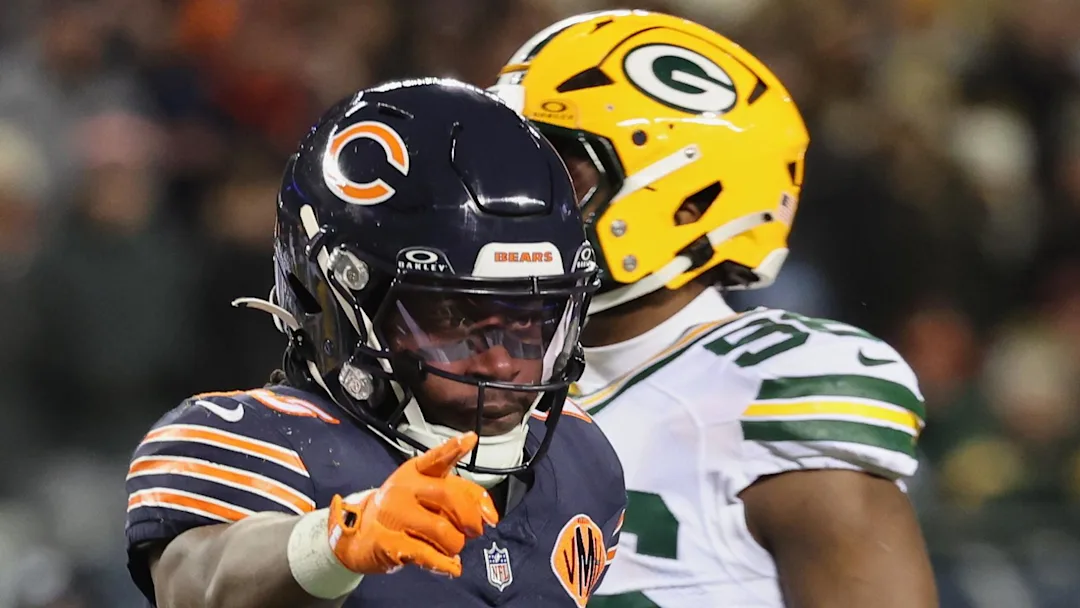
Chargers @ Patriots (5:00 PM) - Mon, Jan 12: Texans @ Steelers (5:15 PM)
Playoff defenses thrive on one thing: late throws. The faster the ball arrives (without sacrificing mechanics and placement), the harder it is for defenders to break on routes – and the easier it is for your offense to stay on schedule.
What Radar Adds That Film Can’t
Film is essential. But film alone can miss what radar makes obvious:
- True release velocity (peak speed): How much “zip” is actually on the ball.
- Consistency across a session: Does your velocity hold up in throw 5… 25…55?
- Fatigue signals: A gradual dip can show arm load issues before soreness becomes a problem.
- Proof you can train and track: Numbers that show improvement – week to week, phase to phase.
In other words: radar turns “he looked sharp” into measurable performance.
The “Playoff QB” Training Blueprint Using a Radar Gun
If you want playoff-level repeatability, don’t just chase max speed. Track it under stress, in realistic scenarios:
1. Baseline + Range Day (Accuracy First)
- Warm-up throws → mid-effort throws → full-effort throws
- Record velocity ranges for short, intermediate, and deep routes
- Goal: establish your “normal” band so you can detect real improvement (or red
flags)
2. Tight-Window Period (NFL-style timing)
Run quick game concepts where the ball must be out on rhythm:
- Slants, sticks, outs, glance routes
- Use radar to confirm the ball speed is staying stable while you clean up footwork and release
3. “2-Minute” Fatigue Test
Late-game throws separate playoff QBs.
- Do a scripted 12–18 play drive simulation
- Radar every 3rd throw
- Watch for drop-offs that show up when your legs get tired (mechanics usually leak there)
4. Weather/Environment Prep
Playoff football often means wind, cold, and slick grips.
- Use radar to compare: dry ball vs. wet ball, cold hands vs. hand warmer protocol
- You’ll learn what your velocity does when conditions get ugly
5) Combine Radar + Video (Best combo)
Radar tells you what happened (speed). Video helps explain why (mechanics).
- When velo dips, check lower-body timing, hip/shoulder separation, and follow-through
- When velo spikes, confirm you didn’t sacrifice accuracy or over-rotate
Gear That Fits the Job
For serious football throwing-speed tracking, you want repeatability and accuracy – not a toy.
- Stalker Pro 3s uses Doppler radar with a published measurement range of 5–300 mph and accuracy of ±0.1 mph, built for durable field use.
- If you want easy wireless workflow, the Stalker Sport 3 Connect is built with Bluetooth connectivity for integrating with apps and displays.
- Stalker also offers an app pairing workflow for supported models (including Pro 3s / Pro 3 / Sport 3 Connect), which can help coaches organize sessions and share clips with speed data.
The Big Playoff Takeaway
The playoffs don’t reward “flash.” They reward execution you can repeat – even when you’re tired, rushed, or playing in bad conditions. Radar helps you train that reality:
- Measure the throw.
- Track the trend.
- Fix the mechanics that cause the drop.
- Prove your development with numbers.