How Heat and Summer Weather Can Affect Radar Gun Performance
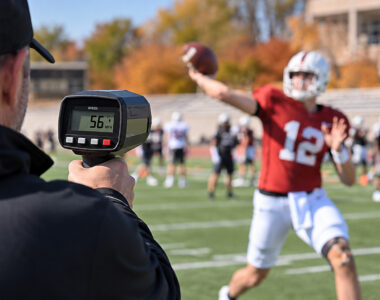
Summer is one of the busiest times of year for outdoor sports, camps, tournaments, training sessions, and community events. Whether you are measuring a baseball pitch, tennis serve, soccer shot, lacrosse shot, or football throw, a radar gun can provide instant speed data that makes training more measurable and engaging.
But outdoor summer conditions can create challenges for both the equipment and the person operating it. High temperatures, direct sunlight, moisture, battery condition, and even where you stand can influence how reliably and consistently you collect speed readings.
Understanding proper setup and care can help you get the most from your radar gun throughout the summer.
Does Hot Weather Affect Radar Gun Accuracy?
A quality sports radar gun is designed to operate reliably within the environmental limits specified by its manufacturer. Normal summer temperatures do not necessarily mean your radar readings will suddenly become inaccurate.
However, extreme heat and prolonged exposure to direct sunlight can affect electronic equipment, especially when a radar gun is left sitting in the sun or inside a hot vehicle.
The bigger concern is often protecting the equipment and maintaining consistent operating conditions.
Always check the operating and storage temperature recommendations for your particular radar gun. Different models may have different environmental specifications.
Avoid Leaving Your Radar Gun in Direct Sunlight
During a tournament or summer practice, it is easy to place a radar gun on a table, tripod, bench, or equipment bag between uses. If that location is exposed to direct afternoon sunlight, the device can become considerably hotter than the surrounding air temperature.
Whenever possible:
- Keep the radar gun shaded when it is not being used.
- Avoid leaving it on hot metal surfaces or artificial turf.
- Store it in its protective case between sessions.
- Never leave the radar gun inside a parked vehicle for extended periods on a hot day.
A shaded equipment area or covered scoring station can make a significant difference during long outdoor events.
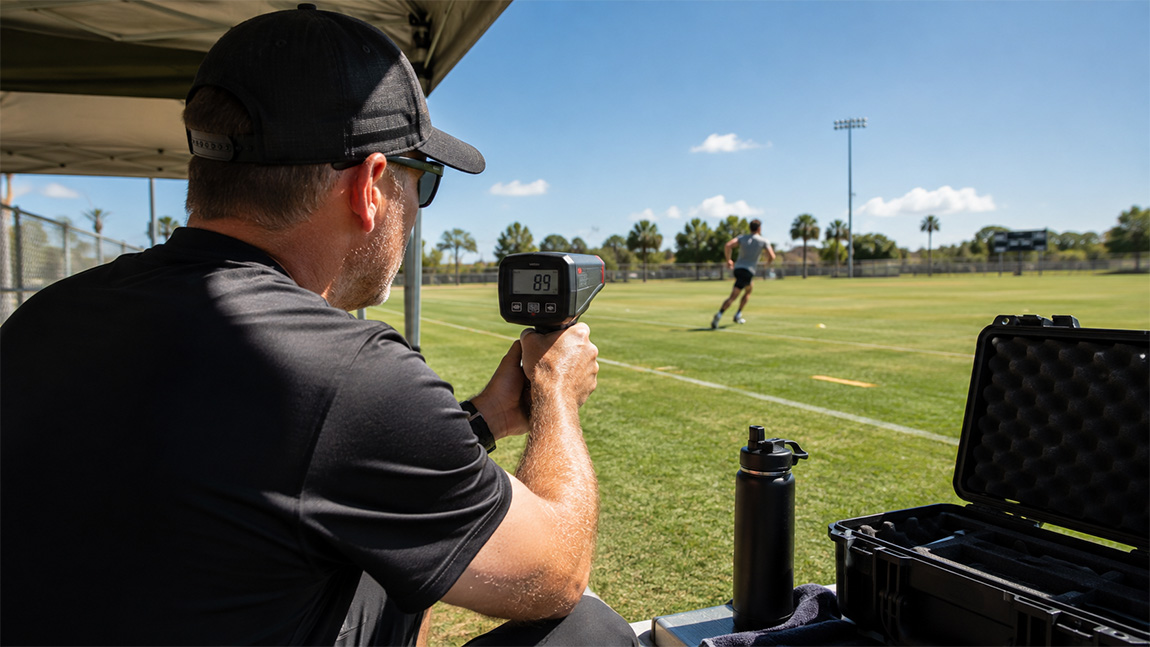
Direct sunlight may also make LCD or other digital displays more difficult to read. Positioning yourself so the display is shaded can make it easier to verify readings without changing the radar gun’s alignment.
Proper Radar Gun Positioning Is Critical
Summer weather gets a lot of attention, but positioning is one of the most important factors affecting the speed reading you receive.
Radar guns measure speed most accurately when positioned as directly as practical in line with the moving object. The greater the angle between the radar beam and the object’s direction of travel, the greater the potential for the displayed speed to be lower than the object’s actual speed.
This is commonly referred to as the cosine effect.
For example, when measuring a tennis serve, soccer kick, lacrosse shot, or baseball pitch, position the radar gun so it is looking as closely as possible along the object’s path rather than sharply across it.
A consistent setup is especially important when you are tracking an athlete’s improvement over several practices.
If you measure from directly behind the athlete one day and from a significant side angle the next, differences in the readings could be caused partly by positioning rather than changes in performance.
Keep Your Setup Consistent
Consistency helps make radar data more useful.
When athletes are tracking their speed throughout the summer, try to duplicate the same testing conditions whenever possible. That includes:
- Radar gun location
- Distance from the athlete
- Angle of measurement
- Type of ball or puck
- Drill format
- Athlete’s starting position
- Measurement procedure
Instead of focusing entirely on an athlete’s single fastest attempt, record several readings. A group of consistent measurements can provide a better indication of normal performance.
This makes it easier to identify meaningful progress rather than reacting to one unusually high or low number.
Take Care of Your Batteries During Hot Weather
Battery condition is easy to overlook, especially during all-day tournaments and sports camps.
Radar guns, wireless accessories, and LED speed displays all depend on reliable power. Weak batteries can interrupt a training session or event at exactly the wrong time.
Before heading outdoors:
- Start with fully charged rechargeable batteries or fresh batteries when appropriate.
- Bring backup batteries or the proper charger.
- Check battery levels before long practices or tournaments.
- Keep spare batteries out of excessive heat and direct sunlight.
- Follow the battery manufacturer’s storage and charging recommendations.
If you use rechargeable equipment, develop a charging routine after every major event so the system is ready for the next session.
Watch for Rain, Humidity, and Moisture
Summer weather can change quickly. A sunny afternoon can turn into a rain shower or thunderstorm with little warning.
Unless your particular radar gun is specifically rated for exposure to water, treat it as electronic equipment that should be protected from rain and moisture.
If bad weather arrives, move the equipment to a protected location.
Also be careful when moving equipment between significantly different temperatures. Taking electronics from a strongly air-conditioned environment directly into warm, humid outdoor air can sometimes result in condensation.
If moisture develops on or around the equipment, allow it to acclimate and dry according to the manufacturer’s instructions before use.
Use a Tripod for Longer Training Sessions
For individual readings, handheld operation may be perfectly appropriate. During extended training sessions, tournaments, combines, or speed challenges, a tripod can provide several advantages.
A stable radar gun can help maintain:
- Consistent aiming
- Consistent measurement angles
- Reduced operator movement
- Easier repeated testing
Once the radar gun is properly positioned, the same setup can be used for multiple athletes.
Tripods can be particularly helpful when a radar gun is connected to an external LED speed display. Players and spectators can see their results immediately without requiring the operator to announce every reading.
Always position tripods and other equipment where they will not create a hazard for athletes, balls, spectators, or officials.
Be Mindful of Outdoor Background Movement
Busy summer sports environments can include players running, vehicles moving in nearby parking lots, golf carts, spectators, equipment, and multiple balls being thrown or hit at the same time.
Proper aiming helps the operator isolate the intended target.
Before recording performance data, become familiar with the radar gun’s aiming characteristics and recommended operating distance. If several moving objects are present, adjust your position or testing area to create a clearer measurement path whenever possible.
This is particularly useful at camps and combines where several drills may be operating simultaneously.
Protect Your Radar Gun During Transportation and Storage
Summer equipment care does not stop after the practice ends.
When traveling between tournaments, camps, or training facilities, keep the radar gun in a protective case rather than allowing it to move freely around a vehicle with balls, bats, helmets, sticks, and other sports equipment.
At the end of the day:
- Turn off the equipment.
- Check it for moisture or dirt.
- Clean it according to the manufacturer’s recommendations.
- Recharge batteries if necessary.
- Store it in a dry, temperature-appropriate environment.
Good storage habits help protect your investment and ensure the radar gun is ready for the next event.
Get Better Speed Readings All Summer Long
Radar guns are valuable tools for summer training because they turn speed into objective, measurable data. But getting useful readings requires more than simply pointing the radar gun at an athlete and pulling the trigger.
Proper alignment, consistent positioning, healthy batteries, protection from excessive heat and moisture, and careful equipment storage can all contribute to a better radar experience.
Most importantly, always follow the operating, environmental, battery, and storage guidelines provided by the manufacturer of your particular radar gun.
Whether you’re measuring baseball pitches, tennis serves, soccer shots, football passes, lacrosse shots, or another fast-moving object, taking a few extra minutes to set up your radar equipment correctly can help you collect more consistent performance data throughout the summer.
Looking for a radar gun for sports training, tournaments, camps, or speed challenges? Radar Sports offers radar guns and speed displays from leading manufacturers for a variety of sports and recreational applications. Visit RadarGunSales.com to explore your options and find the right radar equipment for your needs.