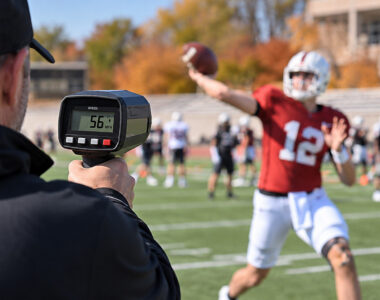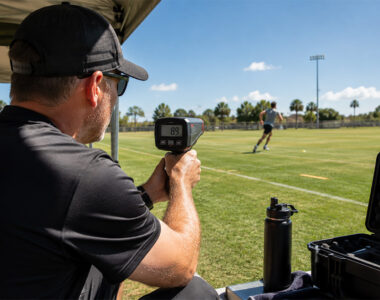
Fall sports often bring cooler temperatures, wet fields, early sunsets, and unpredictable weather. For coaches, athletes, schools, trainers, and event organizers who use radar guns outdoors, these conditions can create extra challenges for protecting equipment.
Radar guns are electronic devices, so rain, moisture, temperature changes, weak batteries, and improper storage can all affect how well they perform over time.
Whether you use a radar gun for football, baseball offseason training, soccer, lacrosse, tennis, or another sport, a few simple habits can help keep your equipment protected throughout the fall season.
Keep Your Radar Gun Protected From Rain
Rain and moisture are two of the biggest concerns during fall practices and games.
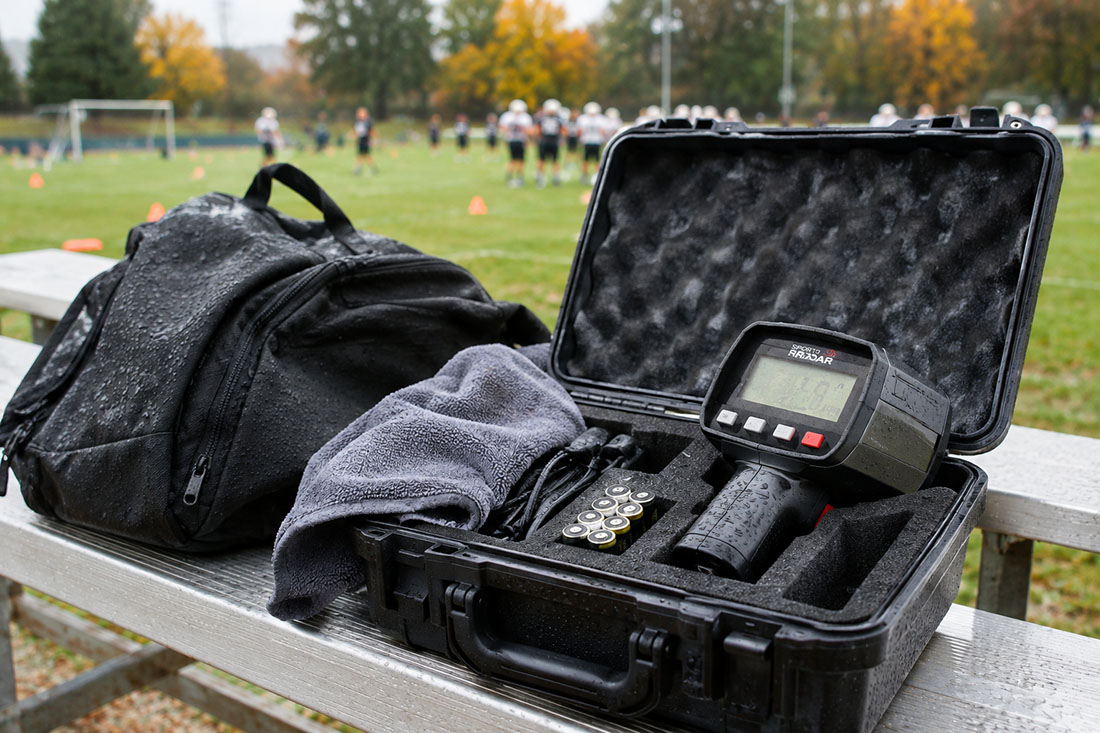
Even a light drizzle can expose a radar gun to moisture, especially when equipment is sitting on a bench, table, tripod, or equipment bag. Unless the manufacturer specifically states that your radar gun is waterproof or weather-resistant, it is best to keep it protected.
Whenever possible, operate the radar gun from a covered area such as:
- A pop-up canopy
- Dugout
- Press box
- Covered bench
- Equipment tent
When the radar gun is not being used, store it in its case instead of leaving it exposed on wet grass, turf, or bleachers.
If rain becomes heavy, move the radar gun to a dry location rather than continuing to use it in conditions that could damage the electronics.
Use a Protective Case
A carrying case is one of the simplest ways to protect a radar gun during fall sports season.
Sports equipment often gets transported alongside helmets, footballs, bats, sticks, cones, tripods, and other heavy gear. A radar gun left loose in a vehicle or equipment bag can easily get scratched or damaged.
A protective case helps shield the equipment from:
- Impact
- Dirt
- Moisture
- Scratches
- Pressure from other equipment
If your radar gun came with a fitted case, use it whenever you transport or store the device.
A padded case is especially helpful for teams that travel frequently to games, tournaments, combines, or training facilities.
Be Careful With Temperature Changes
Fall temperatures can vary significantly throughout the day.
A radar gun might begin the morning in a warm vehicle, spend several hours outside in cold weather, and then be brought back into a heated building.
These temperature changes can sometimes create condensation.
Condensation occurs when moisture forms on a cooler surface as the surrounding air becomes warmer. With electronics, you want to avoid trapping that moisture inside a case.
If your radar gun has been exposed to cold conditions, allow it to gradually adjust to indoor temperatures before storing it for an extended period.
If you notice moisture on the device, allow it to dry completely before placing it back into a closed case.
Monitor Battery Performance in Cold Weather
Cold weather can reduce battery performance, which may become noticeable during long practices, tournaments, or football games.
Before heading outside, check the radar gun’s battery level and make sure rechargeable batteries are fully charged.
It is also a good idea to bring backup batteries when your radar gun uses replaceable batteries.
For fall sports events:
- Start with a fully charged battery.
- Carry backups when possible.
- Keep spare batteries dry.
- Avoid leaving batteries exposed to extreme cold.
- Follow the manufacturer’s charging instructions.
If you use external LED speed displays or other accessories, remember that those devices may require additional power as well.
Preparing batteries before an event can prevent an unexpected shutdown halfway through a training session.
Don’t Leave Your Radar Gun in a Vehicle Overnight
Leaving sports equipment in the car after practice is easy, but radar guns are better stored indoors.
Vehicles can experience significant temperature changes overnight. They may also contain wet uniforms, equipment bags, or other items that increase moisture and humidity.
After practice or a game, bring the radar gun inside and store it in a clean, dry environment.
This also reduces the risk of theft or accidental damage.
Dry Equipment Before Storing It
One of the most common mistakes is putting damp equipment directly into a closed case.
After a wet practice, inspect the radar gun before storing it.
If there is moisture on the exterior, gently wipe it with a soft, dry cloth. If the carrying case became wet, allow the case to dry as well.
Avoid using hair dryers, heaters, or other high-heat methods unless specifically recommended by the manufacturer.
Allowing the equipment to dry naturally is usually a safer approach.
Once everything is dry, place the radar gun back into its case.
Keep Dirt and Mud Away From Controls
Fall fields can get muddy quickly.
Wet grass, mud, and dirt can transfer from a coach’s hands or gloves onto the radar gun’s screen, buttons, or battery compartment.
After each outdoor session, inspect the unit and gently remove any debris.
Pay particular attention to:
- Display screen
- Buttons
- Battery compartment
- Handle
- Charging ports
Avoid spraying cleaners directly onto the radar gun. Instead, follow the cleaning instructions provided by the manufacturer.
Regular cleaning helps prevent dirt from building up over the course of the season.
Make Sure Tripods Are Stable
Many coaches and training facilities use radar guns with tripods for consistent readings.
During fall, however, wet grass and soft soil can make tripods less stable.
Before mounting your radar gun:
- Make sure the tripod legs are secure.
- Choose the most stable surface available.
- Keep the tripod away from running lanes.
- Recheck stability as conditions change.
A radar gun mounted on an unstable tripod can fall and become damaged.
For busy practices or events, position the tripod where players, coaches, and spectators are unlikely to bump into it.
Keep Radar Equipment Separate From Wet Gear
After a rainy practice, almost everything may be wet.
Helmets, uniforms, footballs, soccer balls, tents, and other equipment can bring a lot of moisture into a vehicle.
Keep your radar gun inside its own protective case and separate from soaked gear whenever possible.
Once you reach your home, school, or training facility, remove the radar gun from the vehicle and check that both the device and case are dry.
Store Your Radar Gun in a Clean, Dry Location
If the radar gun will not be used for several weeks, choose a stable indoor storage location.
Ideally, the storage area should be:
- Dry
- Clean
- Protected from extreme temperatures
- Away from direct sunlight
- Free from excessive humidity
Avoid storing radar equipment for long periods inside vehicle trunks, outdoor sheds, garages with major temperature swings, or damp storage areas.
Always check the manufacturer’s recommended operating and storage temperature ranges for your specific radar gun.
Perform a Quick End-of-Season Check
Before putting your radar gun away for winter, take a few minutes to inspect it.
Check the exterior for damage, clean the display, inspect the case, and verify that chargers, cables, tripods, and accessories are accounted for.
Also follow the manufacturer’s recommendations for battery storage. Some devices may require removable batteries to be taken out during long periods of inactivity, while rechargeable systems may have different instructions.
Protect Your Radar Equipment Throughout the Fall
Radar guns can be valuable tools for measuring quarterback throws, baseball pitches, soccer shots, lacrosse shots, tennis serves, and other sports performance.
But fall weather can be tough on electronic equipment.
Protecting your radar gun from rain, keeping it dry, monitoring batteries, avoiding temperature extremes, using a protective case, and storing it properly can help extend the life of your equipment.
Most importantly, always follow the care and storage instructions provided by the manufacturer of your specific radar gun.
Looking for radar guns, speed displays, and sports speed-measurement equipment? Radar Sports offers options for coaches, athletes, schools, training facilities, camps, and sports programs. Visit RadarGunSales.com to explore available radar equipment.